being a professional beekeeper and having hundreds, maybe thousands of hives to inspect. Just examining a Top Bar, two Langs, and a NUC hive were enough to make me break a good sweat today. It has to be hard work doing it day in and day out.
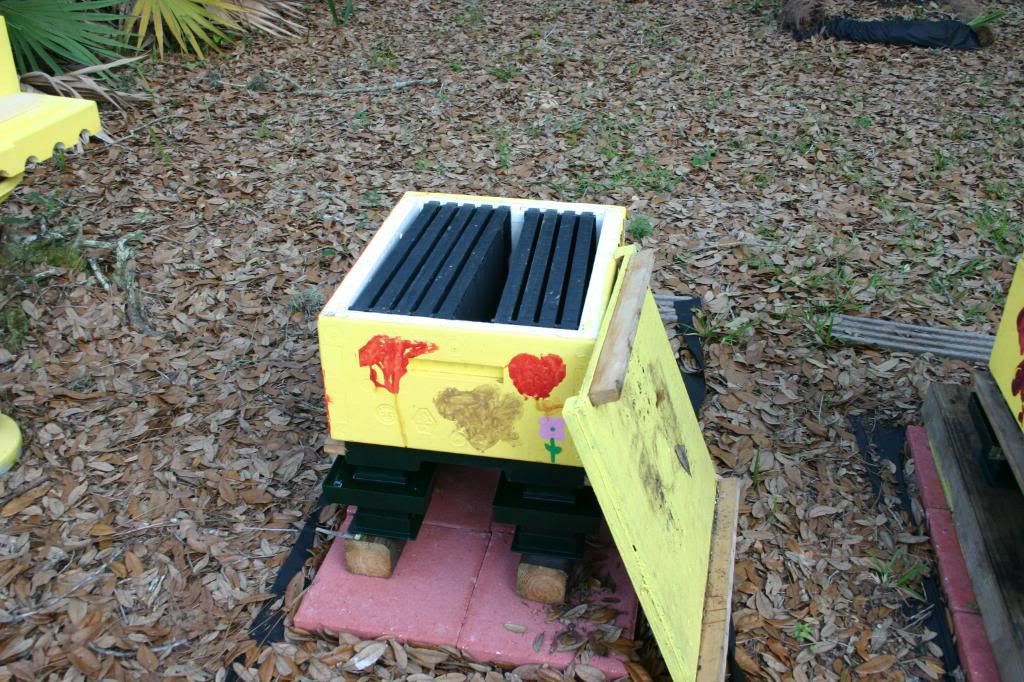
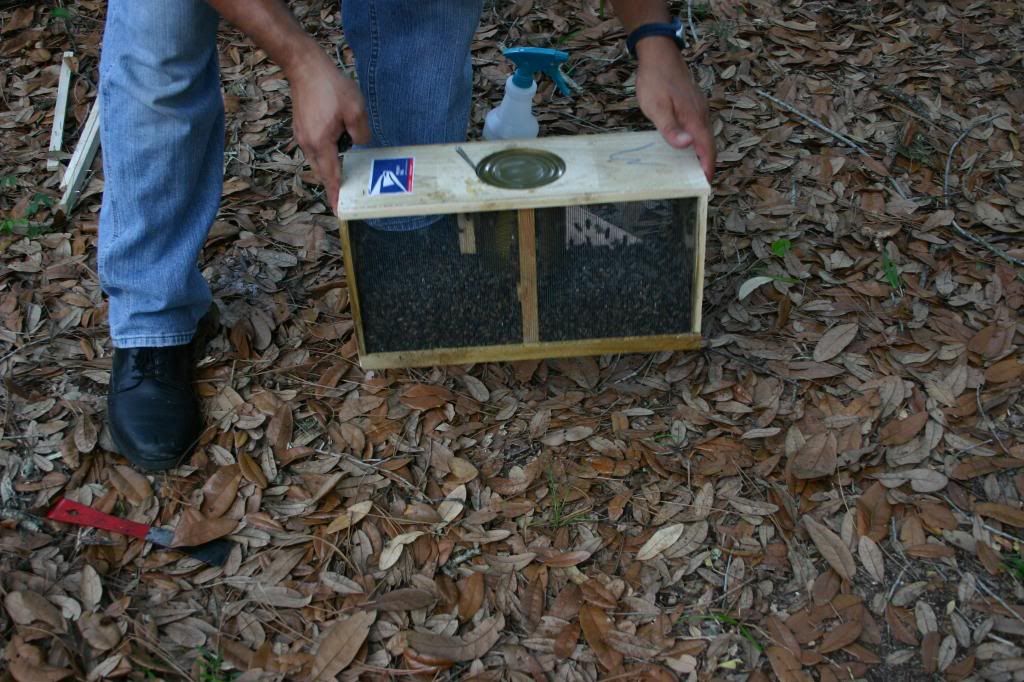
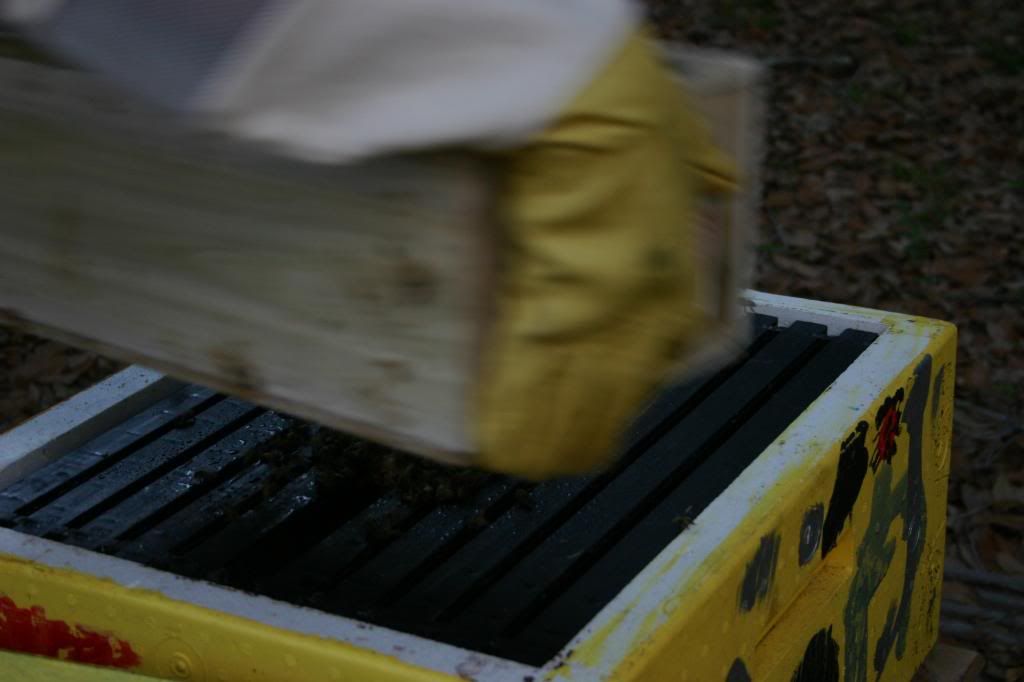
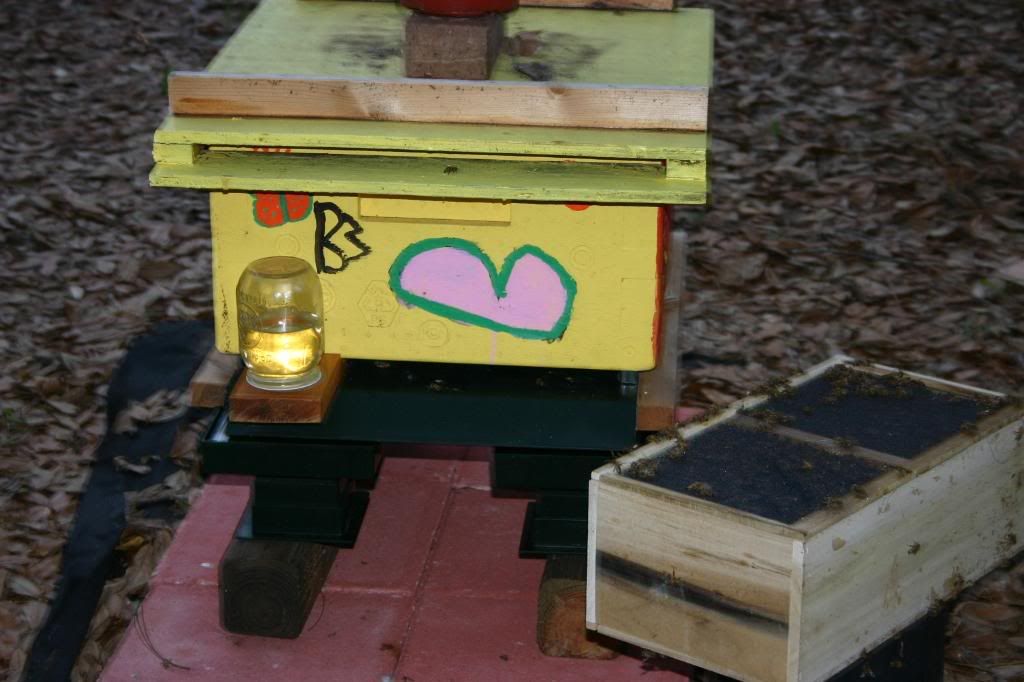
As I did my rounds, the kids took some time to decorate my spare Beemax mediums. Overall results of today’s inspection: Both new packages released their queens from their cages
  ………… and the whole lot is looking great.
The Top Bar Hive -
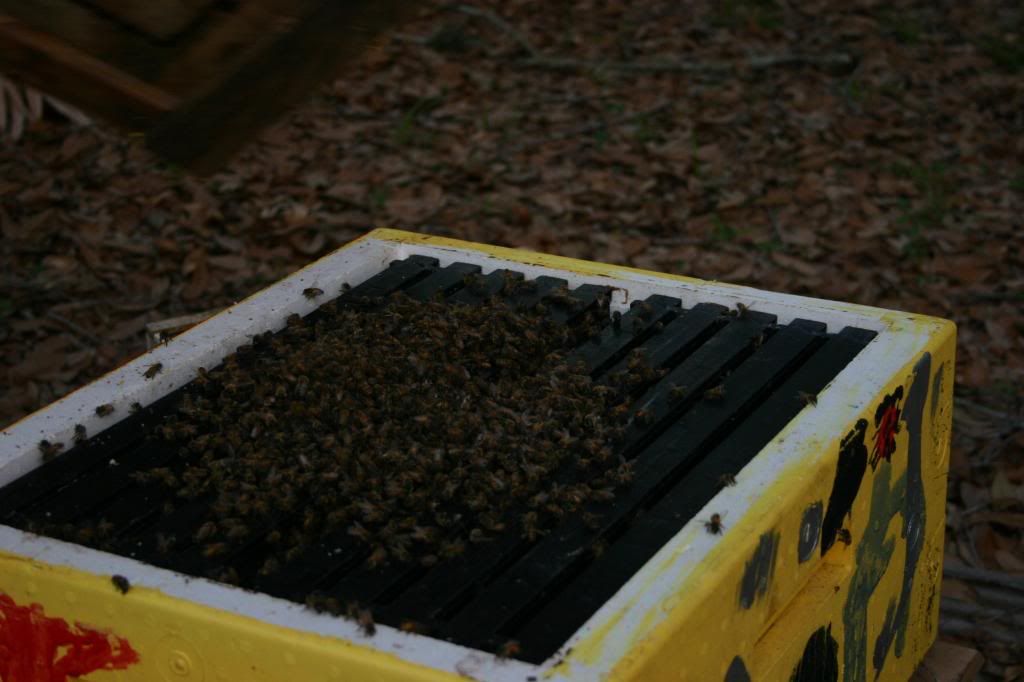
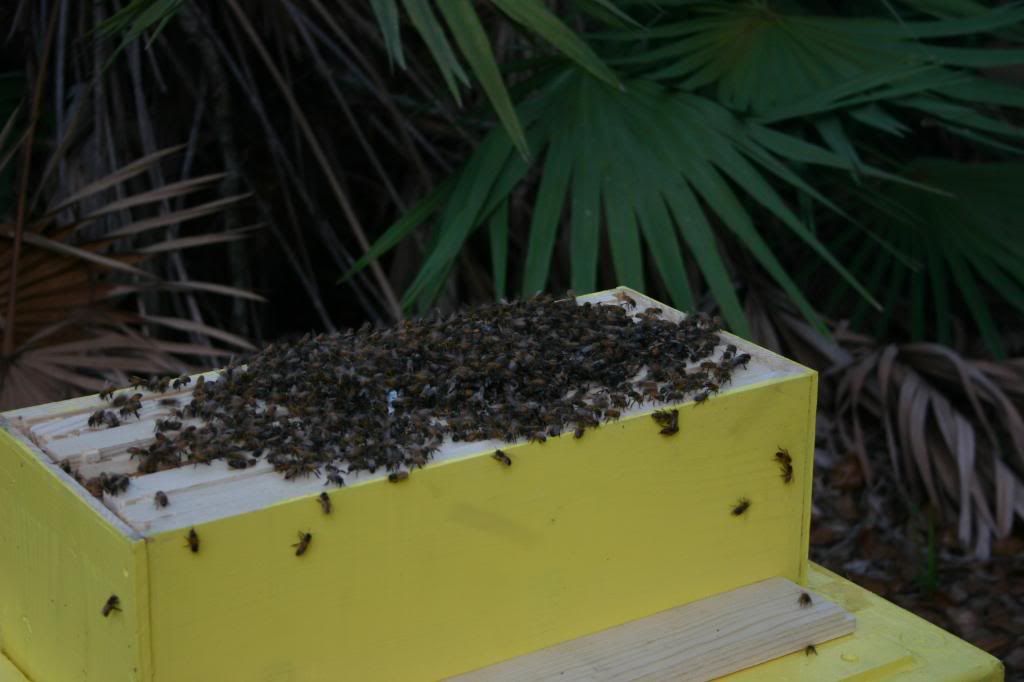
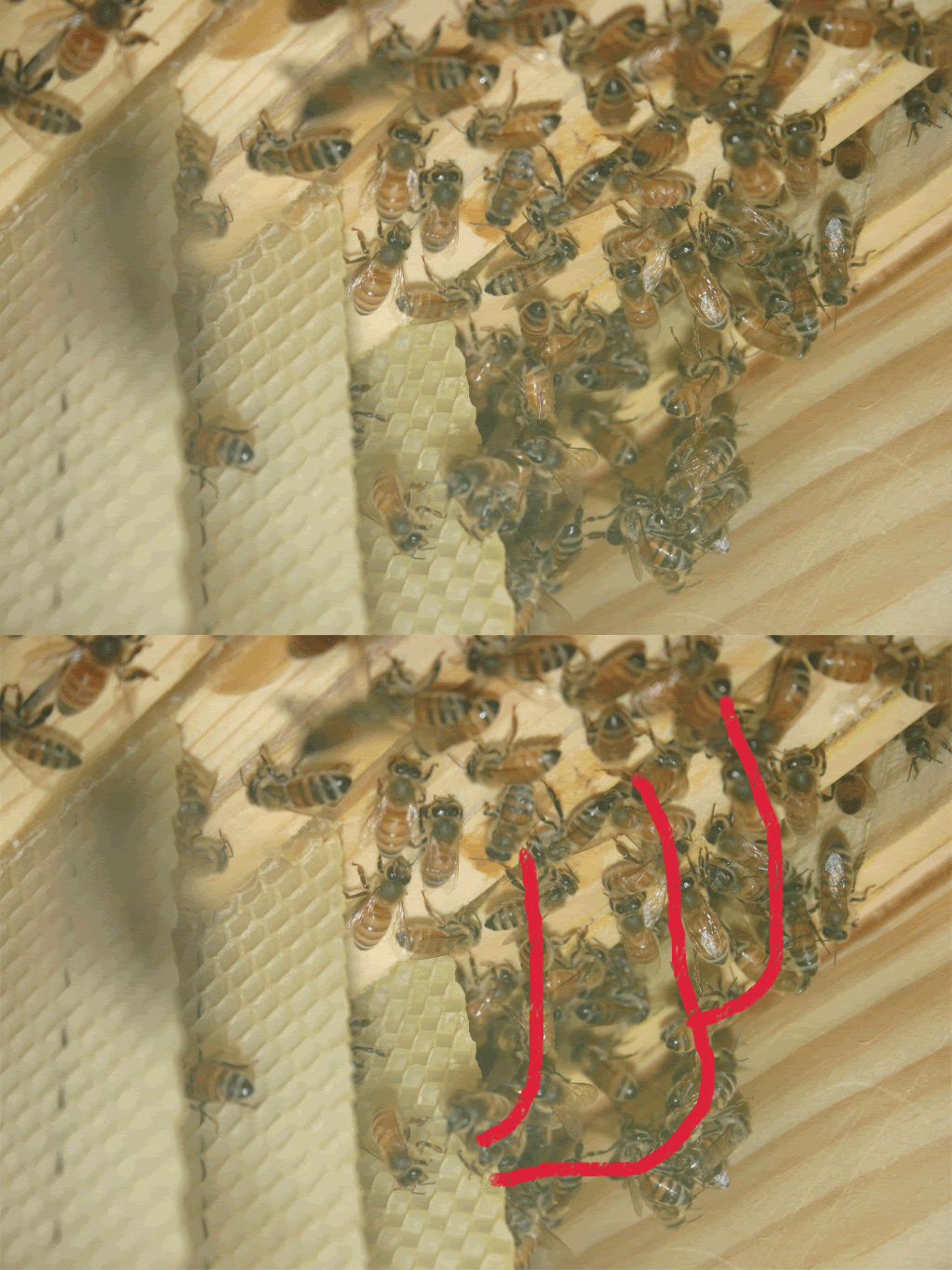
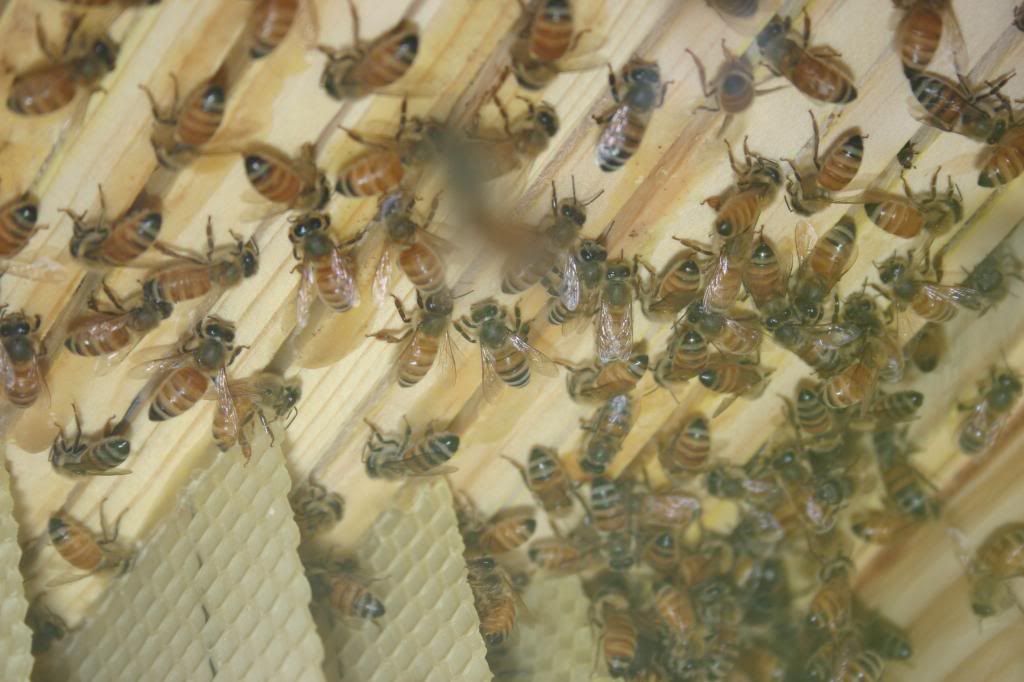
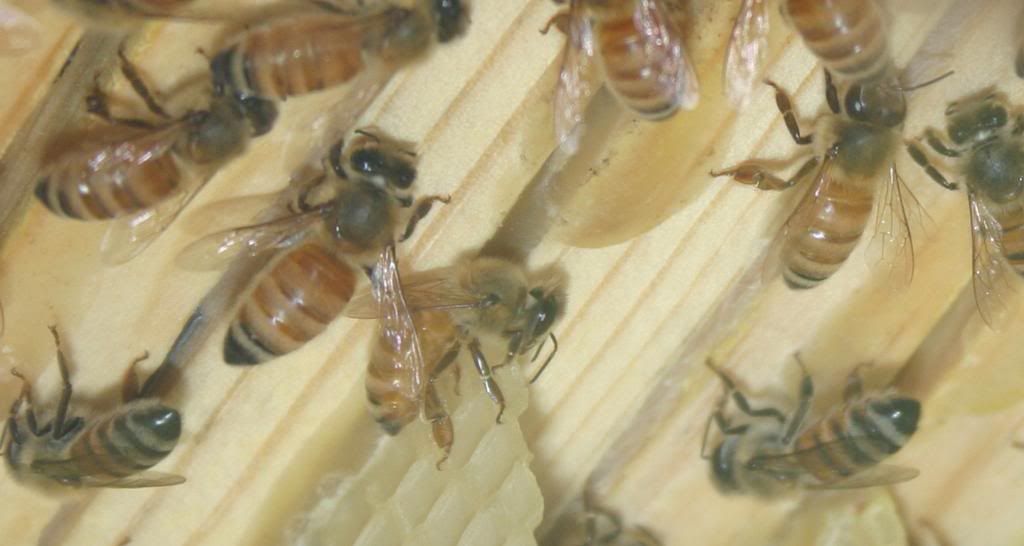
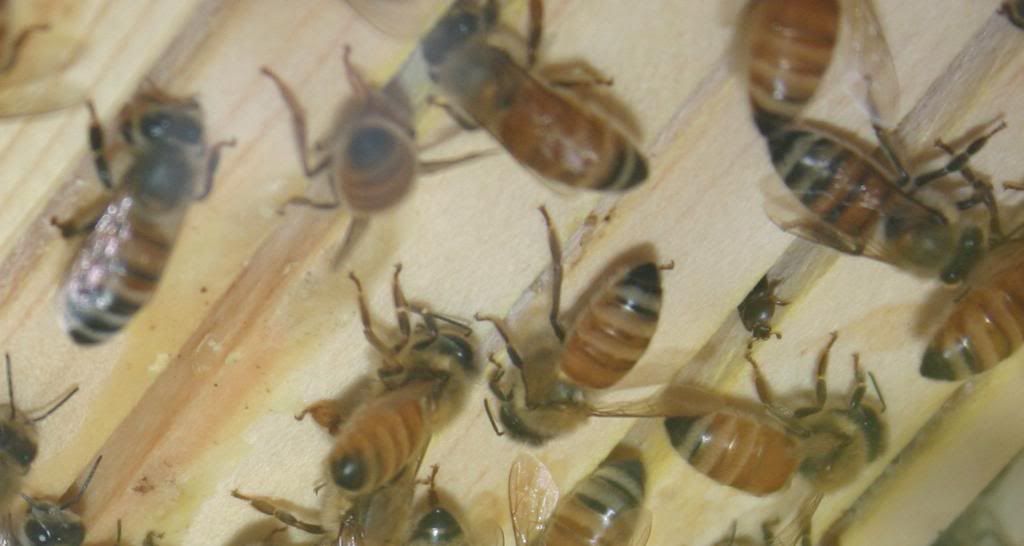
Earlier in the week I noticed the Aussie bees from this hive removing larva in various stages of development,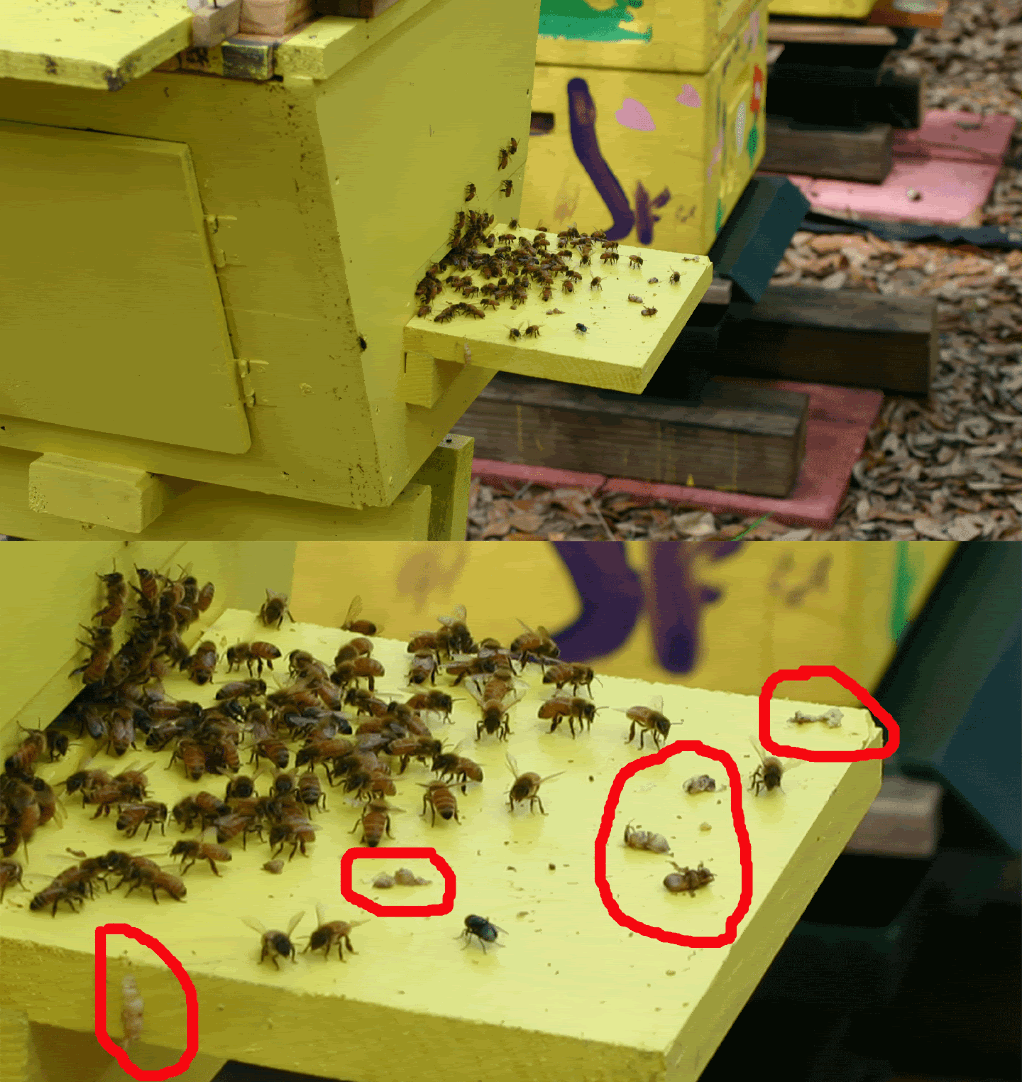 and a large cluster of bees on the 1st two bars. In fact it’s so large I can’t tell if they are drawn out or not. My guess was that they were converting the NUC to a supper. If they are removing larva from the NUC above, it would explain where the larva is coming from and indicate that all new brood is being laid in the TBH cavity.
I want to remove the NUC that populated this hive ASAP. I don’t want the bees to waste labor hours and resources working in it and I really want to see the hive without all that clutter over it.
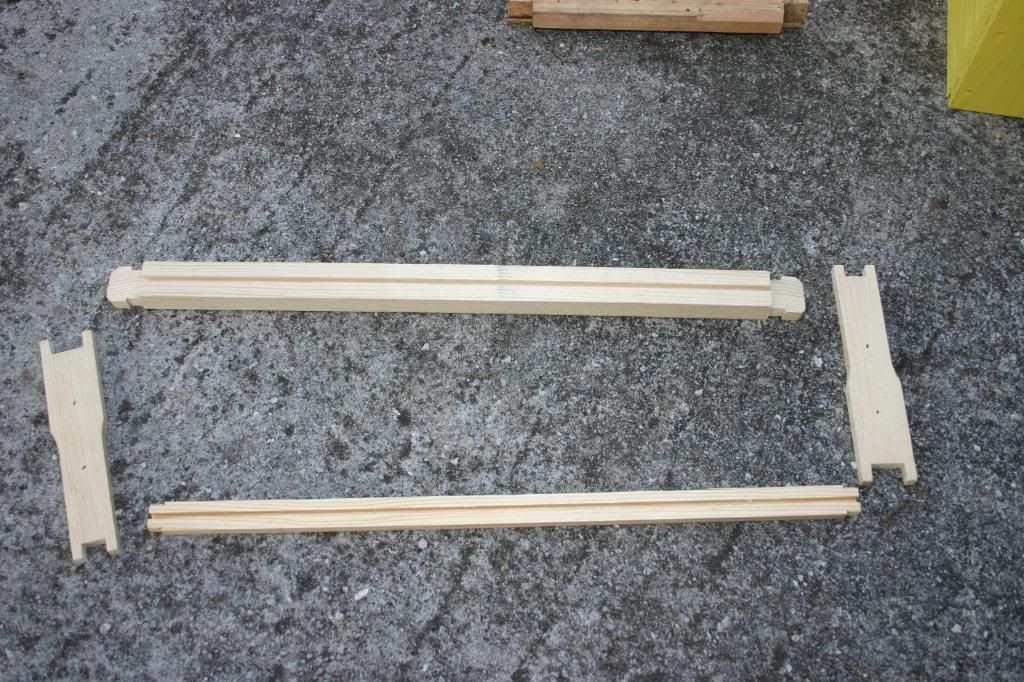
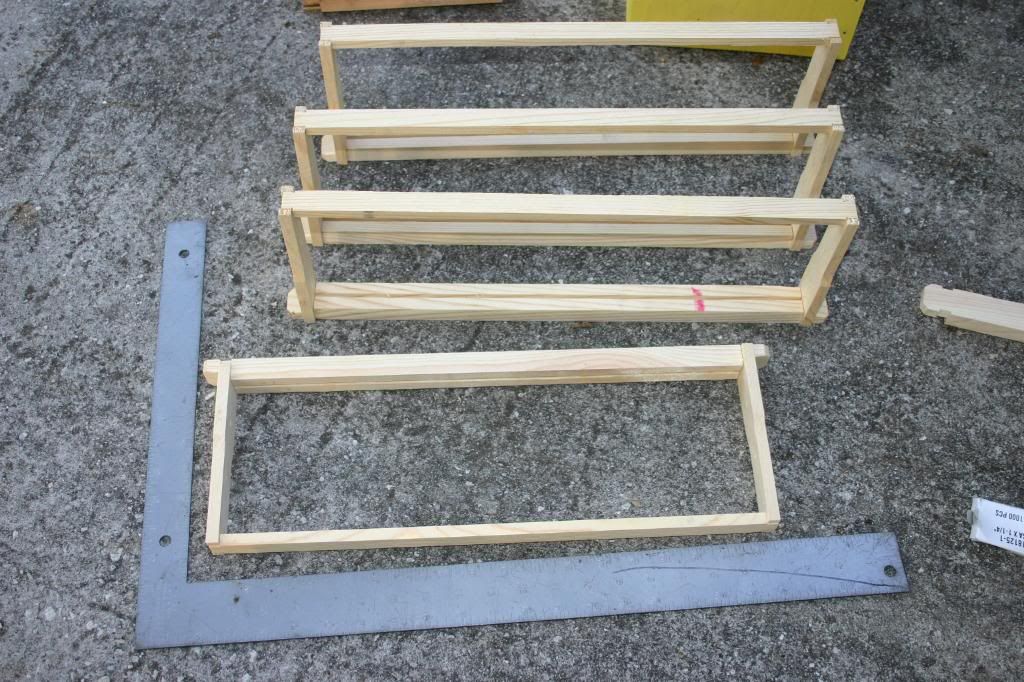
The inspection confirmed my gut feeling, and I had a plan in the off chance that I could be right. I took one of the outside frames and replaced it with a filler frame I built/designed.  The plan is to remove a frame every two weeks, and replace it with a filler frame in its place. It’s a simple ¾ inch piece of wood shaped like a frame.
 Above is the outside frame that was replaced by the filler. A few weeks ago this frame was brand new never used. The top bar hive is really growing and by far is the strongest hive in the apiary right now.
The Original hive - (One 10 frame deep, and 2 mediums)
It may no longer have the numbers, but it has the tools to become the strongest hive in no time at all. The hive has plenty of honey, drawn out frames, and a new queen with tons of laying room.  First frame of the new queen, Good laying pattern.
 The medium supper that had become part of the brood box was converted back into a supper and is about 75% full. I moved the queen excluder below it and maybe in a month when the hive is back to strength the supper can be harvested. The second supper is about 25% full.
The New Hive - (One 10 frame deep)
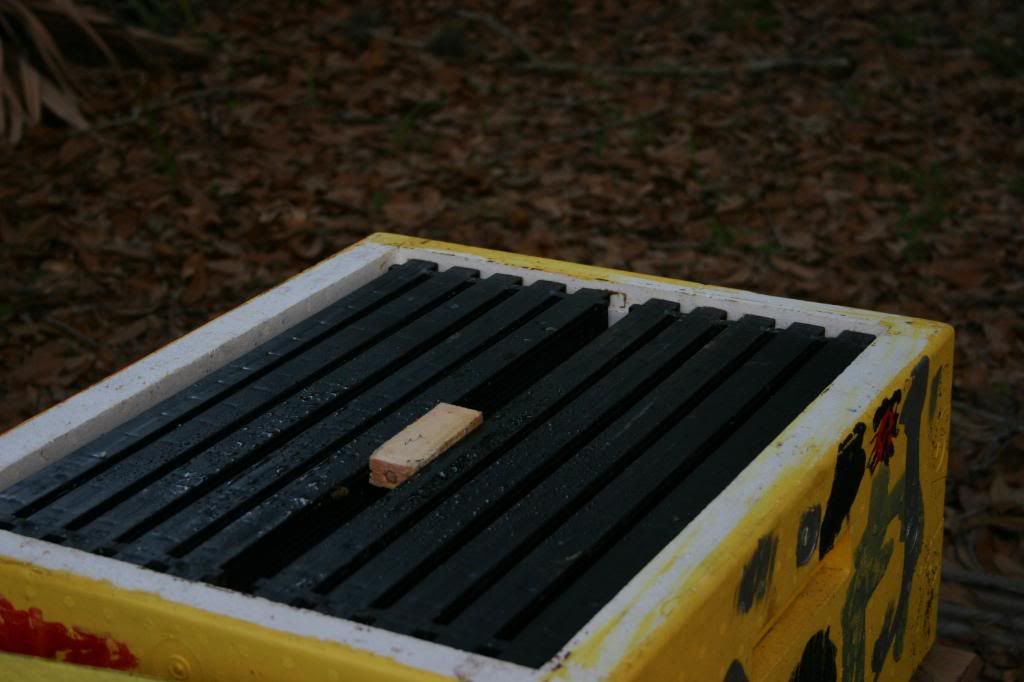
Minimal inspection. All I wanted was to confirm the successful release of the queen, and to insert the frame that was donated by the TBH (4th from right to left in picture). Honey and some laying room will not do this new package any harm. It is great to have a strong hive that can support a weaker hive.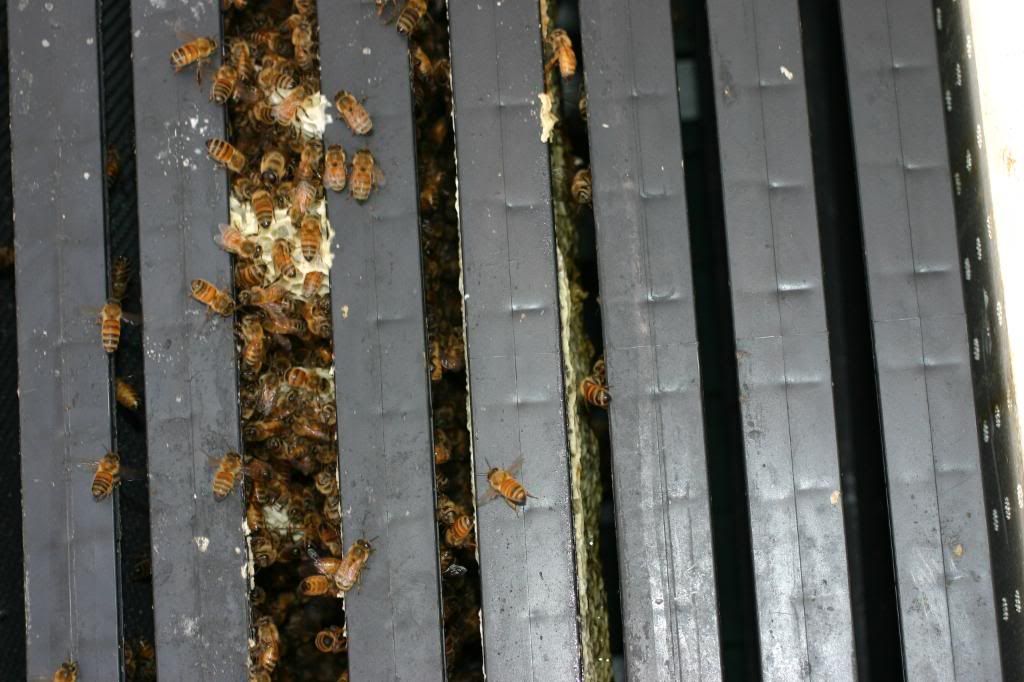
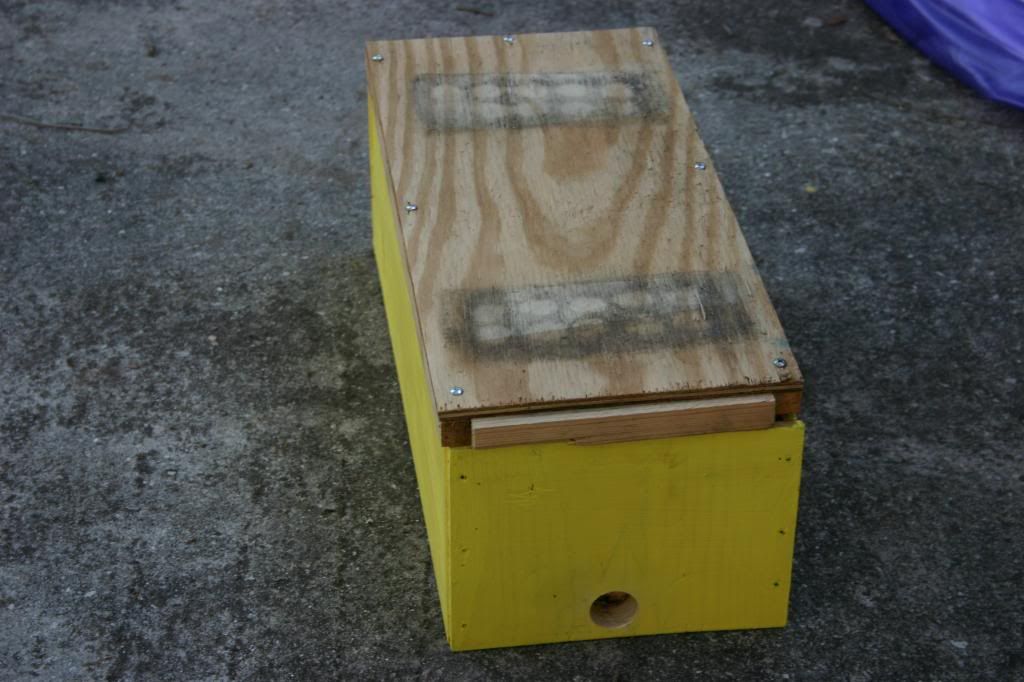
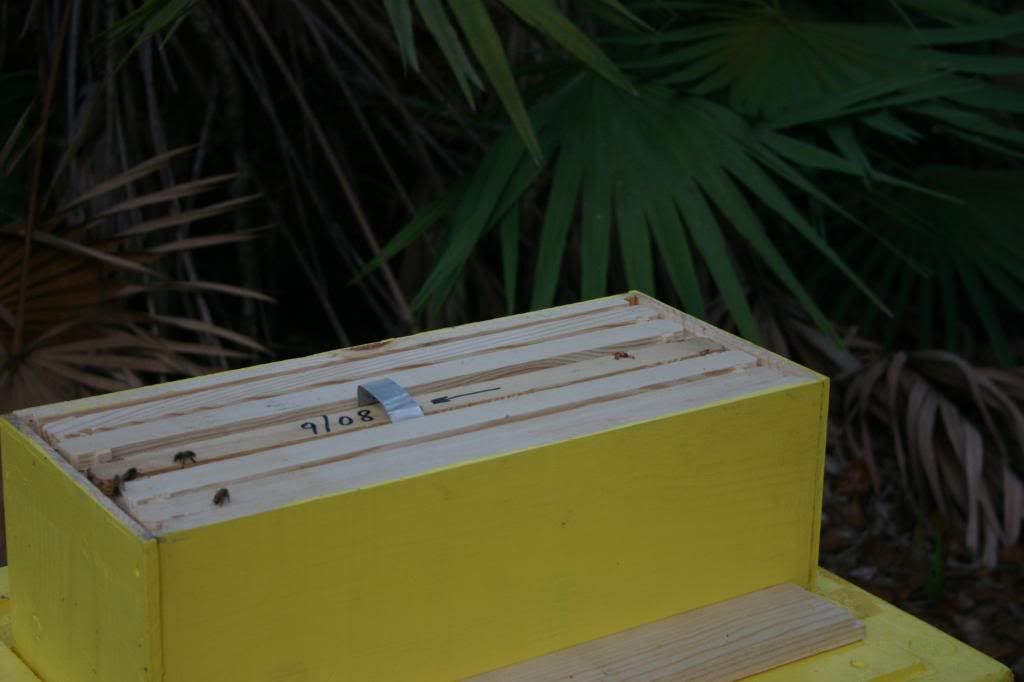
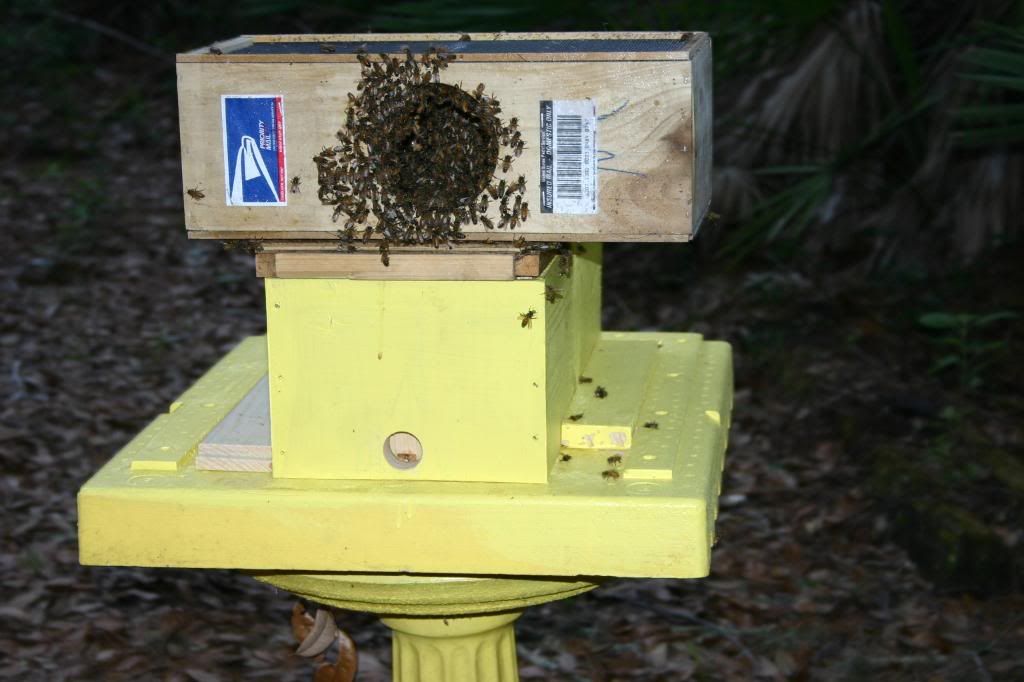
The miniNUC - (5 frame medium) Turns out the converted NUC’s supper is the perfect size for the weak package. The queen was also released and the bees are hard at work on 3 of the five frames. NUC’S, due to their reduced size, can out grow their hive in no time, therefore these guys are not being feed. They have just one frame with wax foundation, and the minute they have anything to spare……… it is going to be donated to any of my other hives that can use it.
 I have a few experiments in mind for these guys, and they are also to serve as my emergency queen hive holder.
Hive beetles are running rampant in the NUC above theTBH. Are the Aussie bees so gentle that they don’t put up a fight????? And in my original hive, they used to keep them under control; they just don’t have the numbers to crowd and protect the hive currently.